
Executive Summary
I developed an AI-powered wildlife monitoring system that processes camera trap videos 17 times faster than manual review, achieving 95.7% accuracy in species identification. The solution went from concept to production-ready in just three weeks, reducing a four-week manual review task to less than three hours of automated processing.
This case study demonstrates how modern AI tools can dramatically accelerate conservation technology development while maintaining professional quality standards.
The Business Problem
Conservation organizations worldwide rely on camera traps to monitor wildlife populations. These devices capture thousands of hours of video footage from remote locations, providing crucial data for species protection and habitat management.
However, processing this footage creates a significant bottleneck:
- Manual review is time-consuming: My test dataset of 2,000 videos would require 167 hours of manual review—over four weeks of full-time work
- Human error increases with fatigue: Accuracy declines after hours of repetitive video watching
- Scaling is expensive: Hiring teams to process footage is cost-prohibitive for most conservation programs
- Delayed insights: Waiting weeks for data processing prevents rapid response to conservation threats
The challenge was clear: could I automate species identification without sacrificing accuracy or requiring months of development time?
My Solution: A Smart Three-Stage Pipeline
I designed an automated video processing system that mimics how human reviewers work, but at machine speed:
Stage 1: Detection - Finding Animals in Video
The system scans video footage to locate animals, filtering out empty frames of forests and vegetation. This stage processes frames efficiently, focusing computational resources only where animals appear.
Stage 2: Tracking - Following Individual Animals
Instead of treating each video frame independently, the system tracks individual animals across multiple frames. This dramatically reduces redundant processing—a 30-second video might contain hundreds of frames but only one or two individual animals.
Stage 3: Classification - Identifying Species
Finally, the system identifies each tracked animal's species. Because tracking reduces redundancy, we make fewer classification decisions with higher confidence.
Key Innovation: By combining these three stages, the system processes each individual animal once rather than re-analyzing it in every frame. This approach is both faster and more accurate than frame-by-frame analysis.

The Efficiency Breakthrough: Smart Data Labeling
Traditional AI development requires manually labeling thousands of training images—in this case, an estimated 76 hours of tedious work before even starting model training.
I found a smarter approach: the training videos followed a naming convention where species names appeared in filenames (like 'capybara_045.mp4'). By automatically extracting these labels and validating the results, I reduced 76 hours of manual labeling to just 3 hours of quality checks.
Result: 96% reduction in data preparation time, allowing me to focus on solving actual conservation challenges instead of tedious data entry.
Measurable Results
Performance Metrics
- 95.7% accuracy across 11 Uruguayan species
- 18 seconds per video end-to-end processing time
- 17× faster than manual human review
- Perfect accuracy (100% F1 score) on three species
Development Timeline
- Week 1: Detection system calibration (tested 27 different configurations)
- Week 2: Tracking system implementation and optimization
- Week 3: Species classification training and full pipeline integration
Total development time: Three weeks from concept to production-ready system
Traditional timeline for similar projects: 8-10 weeks minimum
Cost Savings
For the 2,000-video test dataset:
- Manual review: 167 hours @ standard hourly rates
- Automated processing: ~10 hours total (including setup and validation)
- Time savings: 94% reduction in processing time
- Scalability: System can process unlimited videos with no increase in marginal cost
Business Impact
Immediate Benefits
- Faster Conservation Decisions: Real-time species monitoring enables rapid response to habitat threats
- Reduced Operational Costs: Automation eliminates weeks of manual video review labor
- Improved Data Quality: Consistent automated analysis reduces human error and fatigue
- Better Resource Allocation: Conservation teams can focus on fieldwork and strategy instead of data processing
Long-Term Value
- Scalable Monitoring: System handles growing data volumes without proportional cost increases
- Reusable Technology: Pipeline adapts to different species, regions, and camera types
- Data-Driven Insights: Faster processing enables larger-scale analysis and trend detection
- Competitive Advantage: Demonstrates technical capability in AI-powered conservation tools
Why This Matters for Conservation Technology
Most wildlife AI systems focus on well-known species in heavily studied regions—African elephants, North American deer, Arctic polar bears. But biodiversity conservation requires tools that work for lesser-known species in under-resourced regions.
This system successfully identifies Uruguayan species that rarely appear in AI datasets:
- Gray brockets
- Dusky-legged guans
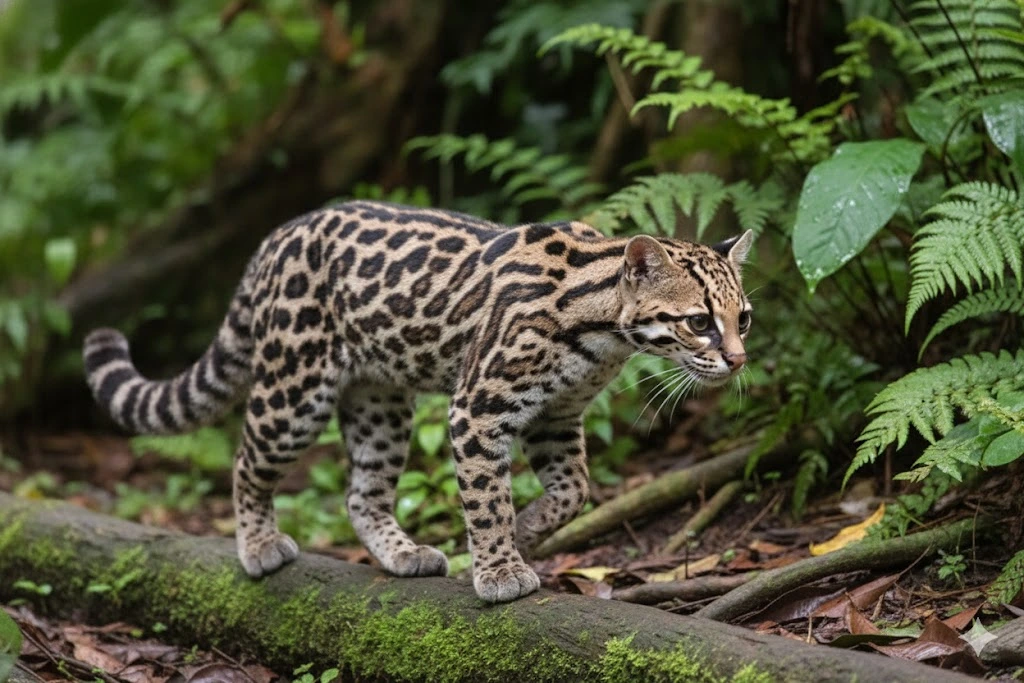
- Margays
- Capybaras
- And seven other local species
This demonstrates that effective conservation AI doesn't require massive datasets or months of development—it requires smart problem-solving and domain understanding.
The Development Advantage: Modern AI Tools
One of the most significant factors in the three-week timeline was the use of AI-assisted development tools. These tools accelerated several time-consuming aspects:
- Rapid experimentation: Tested 27 different system configurations in 3 days instead of 3 weeks
- Code quality: Implemented professional software practices (testing, documentation, version control) without sacrificing development speed
- Problem-solving: Quickly iterated on technical challenges like tracking individual animals across video frames
This isn't about replacing human expertise, it's about amplifying it. The strategic decisions, domain knowledge, and problem-solving were all mine. AI tools handled the repetitive coding tasks, letting me focus on what matters.
Production-Quality Deliverables
Unlike typical research prototypes, this project delivers production-ready software:
- Comprehensive documentation for setup and usage
- Version-controlled experiments for reproducibility
- Automated testing to ensure reliability
- Configuration files for easy customization
- One-command deployment for new users
- Open-source code for transparency and collaboration
This means other conservation organizations can actually deploy and adapt this system for their own needs—something rarely possible with academic research demos.
Real-World Applications
This technology has immediate applications across conservation sectors:
Wildlife Reserves & National Parks
- Automate species population monitoring
- Detect rare or endangered species appearances
- Track animal movement patterns across territories
Research Institutions
- Process large-scale camera trap studies
- Generate species occurrence datasets
- Study animal behavior patterns from video
Conservation NGOs
- Monitor habitat restoration effectiveness
- Detect wildlife trafficking or poaching activities
- Provide data for conservation fundraising and reporting
Environmental Consultancies
- Conduct biodiversity assessments for development projects
- Monitor environmental impact of infrastructure
- Support regulatory compliance reporting
Next Steps & Availability
The complete system is available as open-source software, allowing conservation organizations to:
- Deploy the system for their own camera trap footage
- Adapt the pipeline for different species and regions
- Contribute improvements back to the conservation community
Technical Resources:
- Full source code: GitHub Repository
- Detailed case study: 5-part technical series
- Video demonstrations: Live processing examples included in case study
Conclusion: Speed Meets Quality
This project demonstrates that conservation technology doesn't have to choose between speed and quality. With smart problem-solving, modern development tools, and focus on real-world deployment, I delivered:
- Production-ready system in three weeks
- 95.7% accuracy meeting conservation standards
- 17× speed improvement over manual processing
- Open-source availability for the conservation community
The future of conservation technology isn't about waiting months for perfect solutions it's about rapidly deploying effective tools that work today, then improving them tomorrow.
Every week saved in development is another week of wildlife data being processed, insights being generated, and conservation decisions being made with better information.
That's how I accelerate conservation impact.